Lithium Battery vs Wind Turbine: Which Is Better?
Lithium Battery vs Wind Turbine is one of the most common comparisons among homeowners who already have solar panels. If you’re wondering whether to upgrade your solar system with a lithium battery or a wind turbine, you’re not alone. Both solutions can improve your solar system, but they work in completely different ways. A lithium battery stores excess solar energy, while a wind turbine generates additional electricity whenever there is sufficient wind. In this guide, we’ll compare Lithium Battery vs Wind Turbine to help you decide which option is best for your home in Pakistan.
Should I invest in a lithium battery or add a wind turbine to my solar system? The answer depends on your energy consumption, location, electricity usage patterns, and budget. While both technologies improve the performance of a solar power system, they serve completely different purposes. Lithium Battery vs Wind Turbine: Which Is Better?
A lithium battery stores electricity, whereas a wind turbine generates additional electricity. Understanding this difference is essential before making an investment.
In this guide, we’ll compare lithium batteries and wind turbines in detail, explain their advantages and disadvantages, and help you determine which option is the better choice for your home or business in Pakistan. Lithium Battery vs Wind Turbine.
Understanding the Difference
Although both products are commonly paired with solar panels, they perform different roles.
| Lithium Battery | Wind Turbine |
|---|---|
| Stores excess solar energy | Generates electricity from wind |
| Supplies power when solar panels stop producing | Produces electricity 24/7 in windy areas |
| Does not create new electricity | Creates additional electricity |
| Best for backup power | Best for increasing energy production |
In simple terms:
- A battery stores energy.
- A wind turbine produces energy.
This distinction is the foundation of every purchasing decision.
https://www.windturbine.pk
How a Lithium Battery Works
A lithium battery stores surplus electricity generated by your solar panels during the day.
Instead of sending excess energy to the grid or wasting it, the battery stores that electricity and supplies it later, especially:
- During the evening
- At night
- During load shedding
- On cloudy days (limited duration)
The battery itself does not generate electricity. It only stores electricity that has already been produced.
For this reason, batteries are often referred to as energy storage systems.
How a Wind Turbine Works
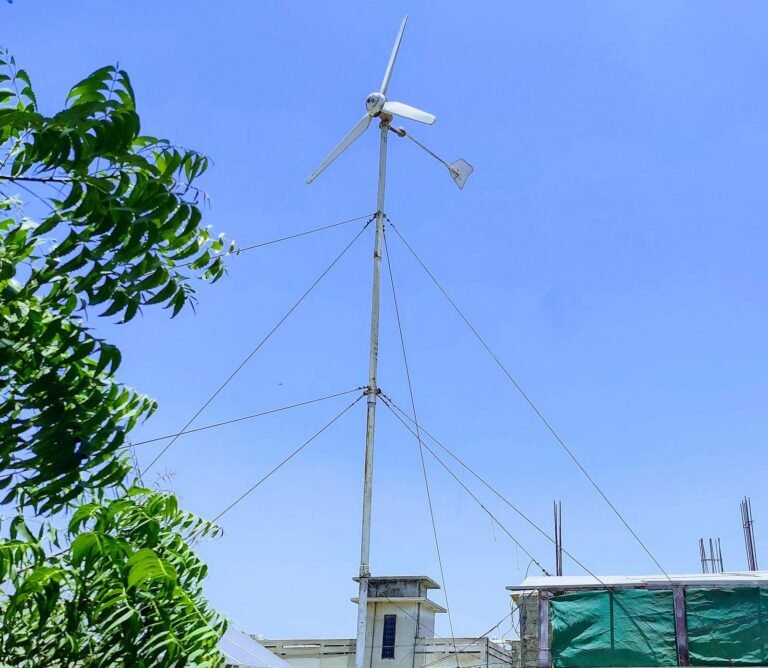
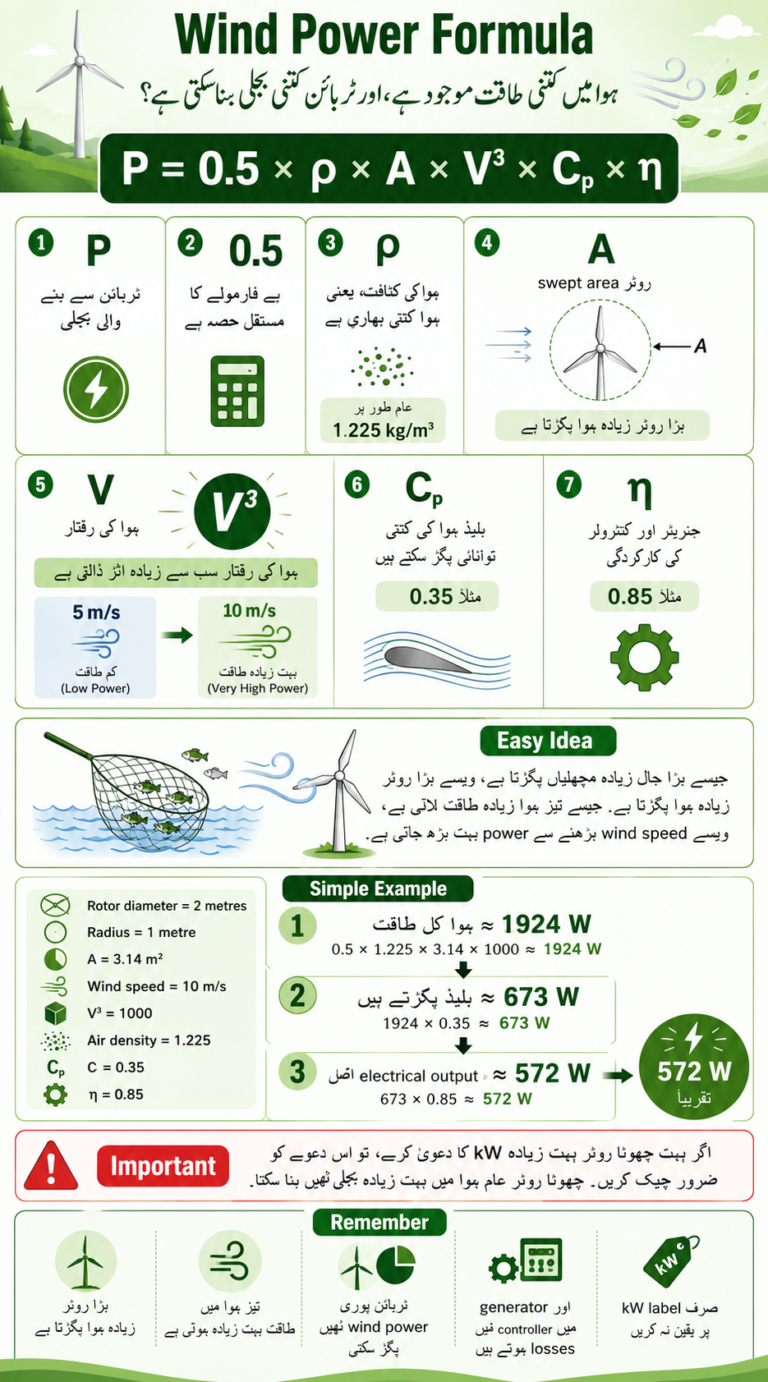
A wind turbine converts the kinetic energy of moving air into electricity.
Whenever wind speed reaches the turbine’s cut-in speed (typically around 3–4 m/s for many small residential turbines), the blades begin rotating, driving a generator that produces electricity.
Unlike solar panels, wind turbines can operate:
- During the day
- At night
- In winter
- During cloudy weather
- During rainy conditions (provided wind conditions are suitable)
This makes wind an excellent complementary energy source to solar.
Why Solar Panels Alone May Not Be Enough
Solar panels perform best during sunny daytime hours.
However, electricity demand often peaks:
- After sunset
- During load shedding
- Early mornings
- In winter
This creates an energy gap.
There are two primary ways to address this:
- Store daytime electricity in a lithium battery.
- Generate additional electricity using a wind turbine when wind conditions are favorable.
Comparison
| Feature | Lithium Battery | Wind Turbine |
|---|---|---|
| Generates electricity | ❌ No | ✅ Yes |
| Stores electricity | ✅ Yes | ❌ No |
| Works at night | If Stored | ✅ Yes (if wind is available) |
| Reduces load shedding impact | ✅ Limited Time | ✅ Helps by generating power |
| Increases total energy production | ❌ No | ✅ Yes |
| Maintenance | Very low | Moderate |
| Lifespan | 7–10years | 15–25 years |
| Moving parts | None | Yes |
| Best for | Backup power | Producing additional electricity |
Cost Comparison in Pakistan
The cost of each solution varies depending on capacity, brand, and installation.
Lithium Battery
Typical residential lithium batteries generally represent a significant upfront investment, especially for larger storage capacities.
Costs increase with:
- Battery capacity (kWh)
- Brand
- Warranty
- Battery management system (BMS)
Wind Turbine
The cost depends on:
- Turbine size
- Tower height
- Installation method
- Wind conditions
- Electrical components
Although the initial investment can be substantial, a wind turbine continues generating electricity for many years if installed at a suitable location. https://windturbine.pk/prices-of-wind-turbine-in-pakistan/
Which Saves More Money?
This depends on your objective.
Choose a Lithium Battery if:
- Your goal is store extra energy
- You frequently experience load shedding.
- You already generate enough solar electricity during the day.
- You want to use solar energy after sunset.
Choose a Wind Turbine if:
- Your solar panels cannot meet your total electricity demand.
- Your location has consistent wind.
- You need backup at night.
- You want to generate more electricity throughout the year.
- You want to reduce dependence on the electrical grid.
Which Option Is Better for Karachi?
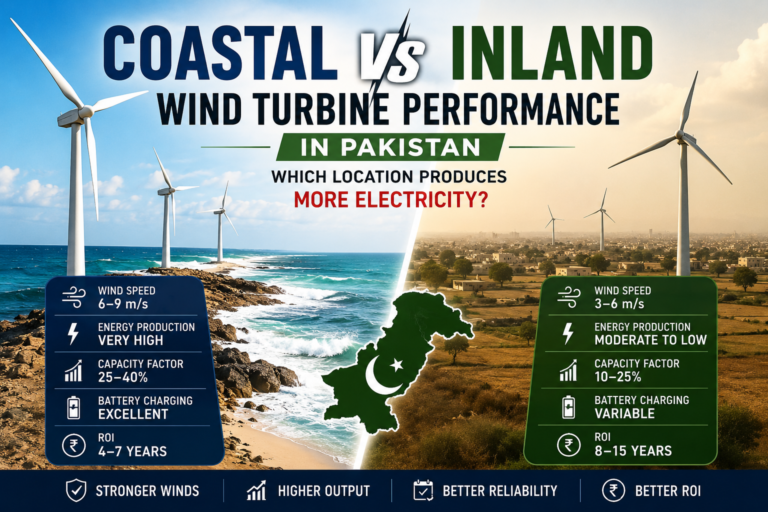
Karachi has one of Pakistan’s strongest residential wind resources, particularly in:
- Coastal areas
- Open residential communities
- Farmhouses
- Industrial zones
- Elevated rooftops with minimal obstructions
In these locations, a properly installed wind turbine can continue producing electricity during evenings and windy weather when solar production is low or unavailable.
For homes with limited roof space or poor wind exposure, investing in battery storage may provide greater practical benefits.
Energy Production vs Energy Storage
Many people compare batteries and wind turbines as though they compete directly.
In reality, they solve different problems.
Lithium Battery
✔ Stores electricity
Wind Turbine
✔ Produces electricity
Therefore, asking:
“Which generates more electricity?”
has a simple answer.
A battery generates none.
A wind turbine generates new electricity whenever wind conditions are sufficient.
https://windturbine.pk/feasibility/
What Happens During Load Shedding?
Lithium Battery
Provides instant but limited backup using stored solar energy.
Wind Turbine
Can continue generating electricity during load shedding if there is enough wind, especially when integrated with a compatible hybrid inverter and battery system. https://windturbine.pk/blog/small-wind-turbine-hyderabad-pakistan/
Which Option Requires More Maintenance?
Lithium Battery
Modern lithium batteries require very little maintenance.
Routine checks generally include:
- Monitoring performance
- Keeping the installation area clean
- Ensuring proper ventilation where required
Wind Turbine
Wind turbines have moving mechanical parts and should be inspected periodically.
With proper maintenance, quality residential wind turbines can provide reliable service for many years.
Can You Use Both Together?
Yes—and in many situations, this is the most effective solution.
A hybrid solar + wind + lithium battery system combines the strengths of each technology:
- Solar panels produce electricity during sunny hours.
- Wind turbines generate electricity when wind conditions are favorable, including many nighttime periods.
- Lithium batteries store surplus electricity for later use.
This combination improves energy availability throughout the day and can reduce reliance on the utility grid.
Which One Should You Buy?
Choose a Lithium Battery if:
- Your solar array already produces extra daytime energy.
- Your area has poor wind conditions.
Choose a Wind Turbine if:
- Your location has good average wind speeds.
- You want to increase total electricity generation.
- You have suitable rooftop or tower installation space.
- You need reliable backup power.
You May Choose Both:
- You want maximum energy independence.
- You live in an area with good solar and wind resources.
- You are building an off-grid or hybrid energy system.
The key point is that a wind turbine and a lithium battery are not direct replacements. One generates electricity, while the other stores electricity. However, in locations with good wind resources, a wind turbine can reduce the amount of battery storage you need because it keeps producing power when solar panels are not.
Here’s how you can explain it in your article:
How a Wind Turbine Can Save You Money Compared to Adding More Batteries
Many homeowners assume that when their solar system needs an upgrade, the only option is to buy more lithium batteries. However, if your location has good wind speeds, installing a wind turbine may provide better long-term value.
1. A Wind Turbine Generates New Electricity
A lithium battery does not produce electricity—it only stores excess energy generated by your solar panels.
A wind turbine, on the other hand, generates new electricity whenever there is sufficient wind, including during the evening, at night, or on cloudy days. This additional energy can reduce the amount of electricity you need to purchase from the grid.
2. Reduced Battery Cycling
Every time a battery is charged and discharged, it completes a charge cycle. Over thousands of cycles, the battery gradually loses capacity.
If a wind turbine supplies part of your home’s electricity during windy periods, the battery is used less often. This means:
- Fewer charge/discharge cycles
- Reduced wear on the battery
- Potentially longer battery service life
Replacing a large lithium battery bank can be expensive, so extending its lifespan can reduce long-term costs.
3. More Energy During the Night
Solar panels stop generating electricity after sunset.
A wind turbine can continue producing power whenever wind conditions are favorable. Instead of relying entirely on stored battery energy, your home may be powered partly by wind.
This means:
- Less battery discharge overnight
- Lower dependence on grid electricity
- Better use of renewable energy
4. Less Need for Additional Battery Capacity
If your electricity demand increases, many homeowners immediately consider buying another lithium battery.
However, if your area has reliable wind, installing a wind turbine may supply part of the additional energy you need. In some cases, this can reduce or delay the need to purchase extra battery capacity.
5. Long-Term Energy Production
A battery stores only the electricity available to it. Once it is empty, it must be recharged.
A wind turbine can continue generating electricity for many years whenever the wind blows. Over its lifetime, the total energy produced can significantly exceed the energy a battery simply stores and releases.
Example Scenario
Imagine a home with a 10 kW solar system and a 10 kWh lithium battery.
After sunset, the family uses approximately 8 kWh of electricity.
Option 1 – Add Another Battery
- More energy storage
- No additional electricity generation
- Higher battery replacement costs in the future
Option 2 – Install a Wind Turbine (Good Wind Location)
- Produces electricity during windy evenings and nights
- Reduces battery discharge
- May reduce electricity imported from the grid
- Can extend battery life by lowering cycling
Important Note
- If your location has poor wind speeds, a lithium battery is usually the better investment.
- If your location has consistent, unobstructed wind (such as many coastal areas, open rural land, or elevated sites), a wind turbine can significantly improve your hybrid energy system.
The best-performing systems often combine solar panels, a wind turbine, and a lithium battery, allowing each technology to do what it does best:
- Solar panels generate electricity during the day.
- Wind turbines generate electricity whenever wind is available, often complementing solar production.
- Lithium batteries store surplus energy for use when generation is insufficient.
Final Verdict
There is no universal winner because lithium batteries and wind turbines perform different functions.
If your priority is storing limited electricity for later use, a lithium battery is the better investment.
If your priority is producing additional renewable electricity and backup at night, a wind turbine is the better choice.
For many homes and businesses in Pakistan—particularly in locations with reliable wind resources—the most effective long-term solution is a hybrid system that combines solar panels, a wind turbine, and lithium battery storage. By generating energy from two renewable sources and storing excess electricity for later use, you can improve energy reliability, reduce dependence on the grid, and make better use of available renewable resources.
Now you may read about vertical wind turbines https://windturbine.pk/blog/1kw-vertical-wind-turbine-in-pakistan-urdu/