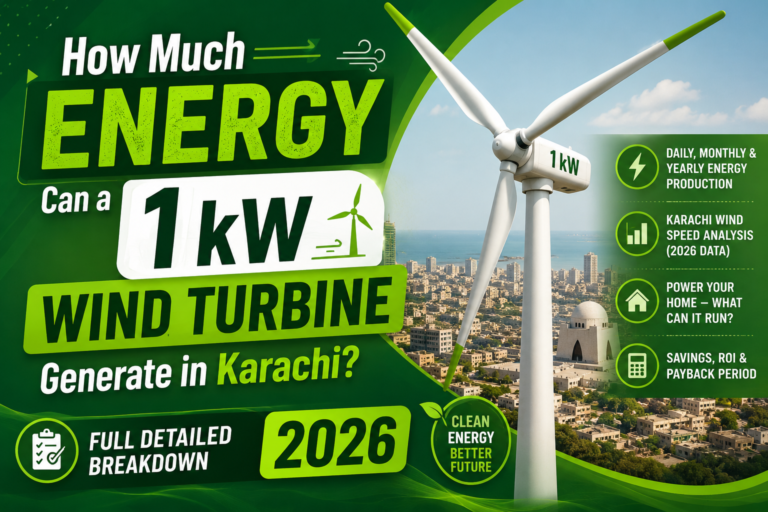
Best Wind Turbine for Home in Karachi- Pakistan
Complete Expert Guide for Choosing a 1 kW to 5 kW Residential Wind Turbine
As electricity prices continue to rise in Pakistan, homeowners in Karachi are looking beyond solar panels for additional sources of renewable energy. One option that receives increasing attention is the small residential wind turbine. Because Karachi is a coastal city, many people assume that every home can generate significant electricity from wind. The reality is more nuanced.
A wind turbine can be an excellent investment for some homes, but it can also become an expensive disappointment if it is installed in the wrong location or paired with the wrong equipment. This guide explains everything homeowners need to know before purchasing a 1 kW to 5 kW wind turbine for residential use in Karachi. https://www.windturbine.pk
Is Karachi a Good City for Wind Turbines?
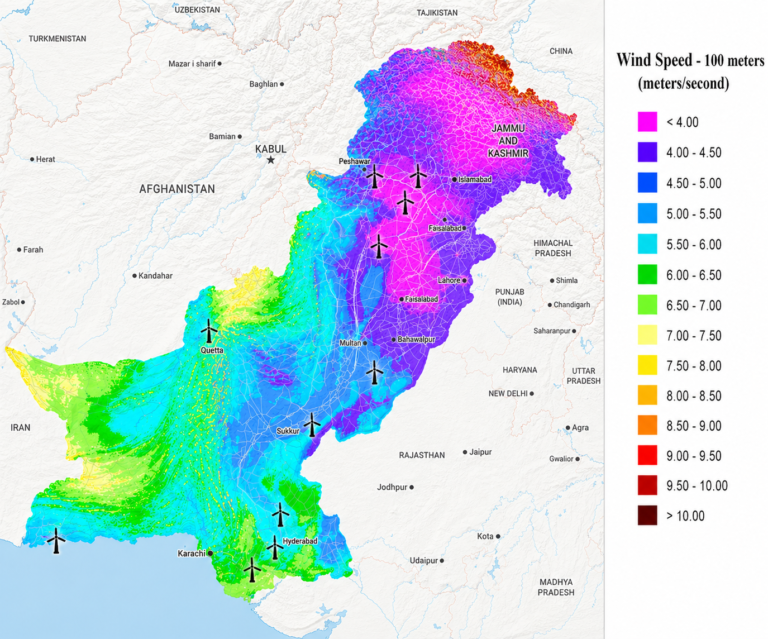
Compared to most cities in Pakistan, Karachi has one of the country’s better wind resources because of its proximity to the Arabian Sea. Coastal winds are generally more consistent than inland winds, especially during the afternoon and evening.
However, not every area of Karachi experiences the same wind conditions.
Areas close to the coastline generally perform much better than densely populated neighborhoods surrounded by high-rise buildings.
Wind conditions can vary significantly even within a few kilometres due to:
- Building height
- Trees
- Nearby structures
- Roof design
- Local terrain
- Distance from the coastline
This is why a professional wind assessment is recommended before installing any wind turbine. Wind Turbine in DHA Karachi
Average Wind Speed in Karachi
Long-term meteorological observations indicate that Karachi generally experiences average annual wind speeds suitable for small wind applications, particularly in open coastal locations.
| Condition | Typical Range |
|---|---|
| Annual Average Wind Speed | 4–6.5 m/s |
| Coastal Areas | 5–7 m/s |
| Strong Summer Sea Breeze | 8–12 m/s |
| Winter Average | Lower than summer |
| Peak Wind Season | April–September |
Summer sea breezes often produce the best electricity generation because wind speeds remain elevated for several hours each day. For 10kw wind turbine visit 10 kw wind turbine
Do Wind Turbines Work Better Than Solar in Karachi?
No.
Solar panels remain the primary renewable energy source for most homes in Karachi because sunshine is abundant and predictable.
A wind turbine should generally be viewed as a complement to solar rather than a replacement.
One of the biggest advantages of wind energy is that it often produces electricity:
- During cloudy weather
- Early morning
- Evening
- Night
- During monsoon winds
- In winter storms
This makes wind and solar an excellent combination.
Can a Wind Turbine Be Connected with Solar Panels?
Yes.
Modern residential systems can combine:
- Solar panels
- Wind turbine
- Lithium battery
- Hybrid inverter
- Utility grid
- Diesel generator (optional)
This arrangement is commonly known as a hybrid renewable energy system.
For many Karachi homeowners, this provides more consistent energy production throughout the day and night.
Can we attach solar and wind? Best Wind Turbine for Home in Karachi- Pakistan
How a Hybrid Solar + Wind System Works
A typical system includes:
- Solar panels generate electricity during daylight.
- The wind turbine generates electricity whenever wind speeds are sufficient, including at night.
- A wind charge controller regulates turbine output and protects the battery.
- A hybrid inverter manages power from both solar and wind, supplies household loads, charges the battery, and imports from or exports to the grid (depending on system design and local regulations).
- The battery stores excess energy for later use.
This setup helps improve energy availability beyond daylight hours.
Can a Wind Turbine Charge Lithium Batteries?
Yes, but not directly.
A wind turbine should not be connected straight to a lithium battery.
Instead, the system normally requires:
- Wind turbine
- Wind charge controller (or wind MPPT controller, depending on the turbine/system)
- Dump load (to safely absorb excess energy when needed)
- Battery Management System (BMS) within the lithium battery
- Hybrid inverter (if AC household loads or solar integration are required)
The controller regulates charging according to the battery voltage and chemistry while protecting the turbine from overspeed and overcharging.
Which Lithium Battery Is Best?
For residential systems, LiFePO₄ (Lithium Iron Phosphate) batteries are generally the preferred choice because they offer:
- Long cycle life
- Good safety characteristics
- Low maintenance
- High charging efficiency
- Stable voltage
- Fast charging
- High usable capacity
Popular residential system voltages include:
- 24 V
- 48 V
- 51.2 V (common for modern home energy storage systems)
Can a Wind Turbine Charge a 51.2V Lithium Battery?
Yes.
Many homeowners in Pakistan already have 51.2 V LiFePO₄ batteries as part of their solar systems.
A wind turbine can be integrated with these batteries using a controller designed for the battery’s nominal voltage and charging profile. Compatibility should always be verified with the controller and inverter manufacturer.
Choosing the Right Wind Turbine Size
1 kW Wind Turbine
Suitable for:
- Small homes
- Backup charging
- Lighting
- Fans
- Internet equipment
- CCTV
- Small refrigerators
Typical household support:
- LED lighting
- Ceiling fans
- Television
- Wi-Fi router
- Laptop charging – Best Wind Turbine for Home in Karachi- Pakistan
2 kW Wind Turbine
Suitable for:
- Small family homes
- Apartments with suitable installation locations
- Backup systems
Can contribute power for:
- Lighting
- Fans
- Refrigerator
- Television
- Computer
- Water pump (depending on starting current and overall system design)
3 kW Wind Turbine
Often a practical choice for many detached homes with good wind exposure.
Suitable for:
- 5–10 marla houses (site dependent)
- Solar hybrid systems
- Day and night generation
May support:
- Lights
- Fans
- Refrigerators
- Washing machine
- Water pump
- Air conditioners (with adequate inverter, battery, and overall system capacity)
5 kW Wind Turbine
Suitable for:
- Large homes
- Farmhouses
- Villas
- High electricity consumption
- Homes with larger battery banks
Can significantly reduce dependence on grid electricity where wind conditions are favourable.
Which Turbine Type Is Better?
Horizontal Axis Wind Turbine (HAWT)
Advantages:
- Higher efficiency
- Better energy production
- Lower cost per kWh
- Widely available
- Suitable for open areas
Disadvantages:
- Requires yaw mechanism
- Needs unobstructed wind
- Usually installed on taller towers
Best for:
- Independent houses
- Farmhouses
- Coastal plots Vertical-vs-horizontal-wind-turbine-pakistan Best Wind Turbine for Home in Karachi- Pakistan
Vertical Axis Wind Turbine (VAWT)
Advantages:
- Accepts wind from different directions
- Simpler mechanical orientation
- Can suit some architectural settings
Disadvantages:
- Generally lower efficiency than well-designed HAWTs
- Lower annual energy production for the same rated capacity in many residential applications
- Often higher cost per generated unit of electricity
Best for:
- Locations with highly turbulent wind where tower height is limited, though performance expectations should be realistic.
Recommended Tower Height
Tower height is one of the most important factors affecting performance.
Typical recommendations:
| Turbine Size | Suggested Tower Height |
|---|---|
| 1 kW | 8–12 m |
| 2 kW | 10–15 m |
| 3 kW | 12–18 m |
| 5 kW | 15–24 m |
A useful rule of thumb is to position the rotor well above nearby buildings and trees to reduce turbulence. https://www.windturbine.pk
Rooftop or Ground Installation?
Ground-mounted towers usually provide better wind quality because they can be taller and located away from roof turbulence.
Rooftop installations are possible, but the roof structure, vibration, noise, safety, and local wind conditions all need careful engineering assessment. Best Wind Turbine for Home in Karachi- Pakistan
Does a Wind Turbine Work During Load Shedding?
Yes.
If connected to a battery-based hybrid system, the turbine can continue charging the battery whenever there is sufficient wind, regardless of whether the utility supply is available.
Will It Work at Night?
Yes.
Unlike solar panels, a wind turbine can generate electricity at any time of day or night whenever wind speeds are above the turbine’s cut-in speed.
Maintenance Requirements
Routine maintenance typically includes:
- Inspecting blades for damage.
- Checking tower bolts and guy wires (if fitted).
- Lubricating components where required by the manufacturer.
- Inspecting bearings.
- Checking electrical connections.
- Testing the braking or overspeed protection system.
- Verifying controller and battery operation.
Safety Features
A quality residential wind turbine should include:
- Overspeed protection
- Automatic braking
- Dump load protection
- Lightning protection
- Proper earthing
- Over-voltage protection
- Short-circuit protection
How Much Electricity Can It Produce?
The actual output depends on:
- Average wind speed
- Turbine design
- Rotor diameter
- Tower height
- Air density
- Turbulence
- System efficiency
The rated power (e.g., 1 kW, 3 kW, 5 kW) is achieved only under the manufacturer’s specified rated wind speed, which is often much higher than average daily wind speeds. Therefore, annual energy production is a more meaningful comparison than rated power alone.
Is a Wind Turbine Worth It in Karachi?
A residential wind turbine can be worthwhile if:
- Your property has a good wind resource.
- The turbine is installed on an adequately tall tower.
- It uses quality components.
- It is correctly matched with the controller, inverter, and battery.
- It is combined with a well-designed solar system where appropriate.
For many homeowners, the best approach is a hybrid solar + wind system, where solar provides predictable daytime generation and the wind turbine contributes during windy periods, including evenings and nights. This can improve energy resilience and reduce reliance on the grid, but expected savings should always be based on a realistic site assessment rather than optimistic manufacturer ratings.
Frequently Asked Questions
Can I add a wind turbine to my existing solar system?
Yes, in many cases. Integration depends on the inverter, battery, and charge controller. Some hybrid inverters support wind inputs directly, while others require a separate wind controller.
Can a wind turbine charge a lithium battery?
Yes. A compatible wind charge controller is required to charge LiFePO₄ batteries safely.
Is a 1 kW turbine enough for a home?
It is suitable for reducing the load of essential appliances, but most average households will need solar panels, a larger wind turbine, or both to meet a significant portion of their electricity demand.
Should I choose a vertical or horizontal wind turbine?
For most homes in Karachi with adequate tower height and open wind exposure, a quality horizontal-axis wind turbine generally delivers higher annual energy production than a similarly rated vertical-axis turbine.
Wind Turbine Price in Pakistan WInd Turbine Price in Pakistan