Pakistan faces chronic energy shortages, but it is blessed with one of the world’s most promising wind energy resources. Wind turbines—tall structures with rotating blades that convert kinetic energy from the wind into electricity—offer a clean, sustainable alternative to fossil fuels. With growing concerns over climate change, rising fuel imports, and the need for reliable power, wind energy is emerging as a key pillar of Pakistan’s renewable energy strategy. This article explores Pakistan’s wind energy potential, the current state of wind turbine deployment, and the specific locations where this green power can (and is being) generated.

Operation of Jhimpir wind turbines offers a ray of hope in power gloom – Newspaper – DAWN.COM
Does Pakistan Have Wind Energy Potential?
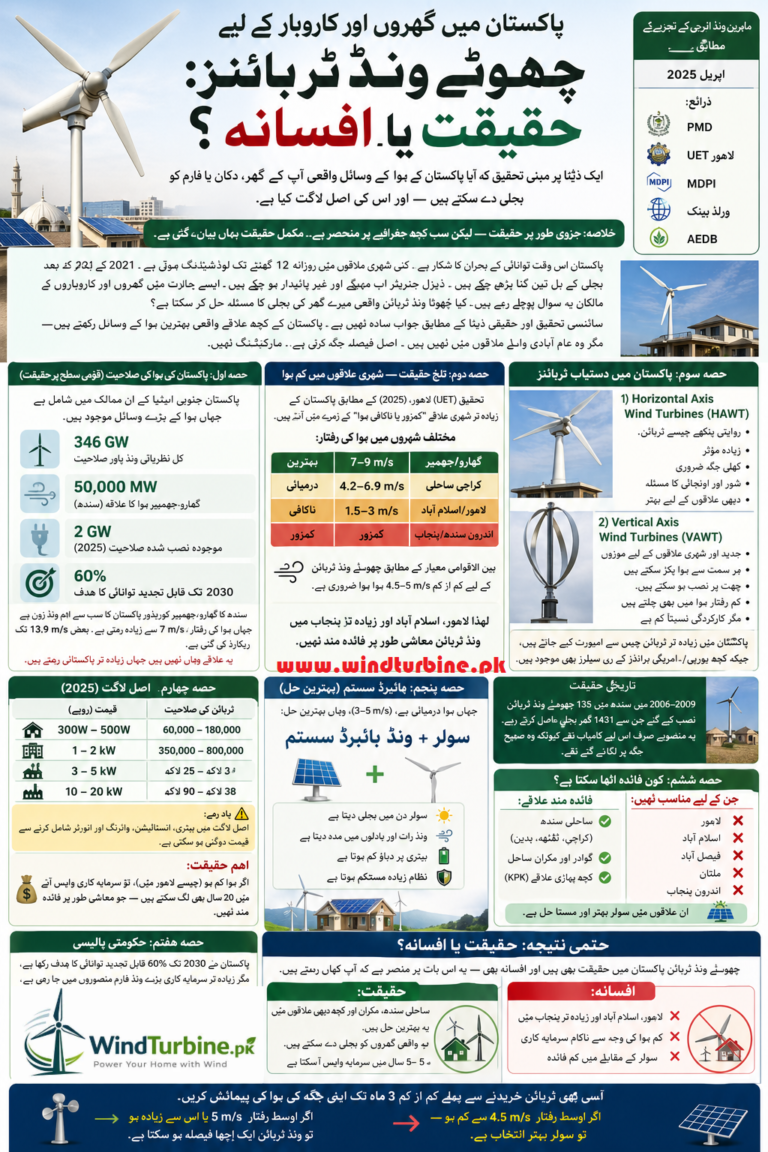
Yes—Pakistan has immense wind energy potential. According to recent studies, the country’s theoretical wind power potential exceeds 346 GW, with a technically exploitable capacity estimated at around 132 GW (using a conservative 5 MW per km² installation density). A significant portion—up to 50 GW—lies along the 60–180 km coastal wind corridor in southern Sindh (Gharo–Keti Bandar), where consistent sea breezes and monsoon winds deliver average speeds often exceeding 7–8 m/s at hub heights suitable for modern turbines.
The National Renewable Energy Laboratory (NREL) and Pakistan Meteorological Department (PMD) have mapped these resources, confirming that about 3–8.4% of Pakistan’s land area offers moderate to excellent wind conditions, primarily at 50–100 meters above ground level—the ideal height for commercial wind turbines. Offshore potential adds another 21 GW along the coastline.
As of early 2026, Pakistan has installed approximately 1,845–1,920 MW of wind capacity (about 4–5% of total power generation), produced mainly by 36 private projects. The government aims to scale renewables significantly under the Alternative and Renewable Energy Policy, targeting higher shares by 2030 to reduce oil imports and cut emissions.
Visualizing the Potential Pakistan’s wind resources are strongest in the south and vary by province.

Wind Energy Potential Assessment and Forecasting its Diffusion in Pakistan
Major Wind Power Projects and Current Status
Pakistan’s first commercial wind farm was commissioned in 2009 at Jhimpir (Zorlu Enerji, 56 MW). Since then, the sector has grown rapidly, with most projects clustered in Sindh due to superior wind regimes and proximity to the national grid. Key operational plants include:
- Jhimpir Wind Farms (Thatta district): Multiple projects by Zorlu, Three Gorges, FFC Energy, and others.
- Gharo and Keti Bandar corridors: Foundation Wind Energy, Sapphire Wind (53 MW), and several others totaling hundreds of MW.
- Recent additions have pushed cumulative capacity past 1,800 MW, with more under development.
These projects have created jobs, reduced reliance on expensive imported fuel, and demonstrated capacity factors often above 30–40% in peak seasons.
Cities and Districts in Pakistan Where Wind Energy Can Be Generated
Wind energy is not uniformly viable across every city—feasibility depends on consistent wind speeds (typically >6 m/s), land availability, grid access, and environmental factors. Pakistan’s highest-potential zones are concentrated in the southern coastal belt, but viable sites exist in other provinces too. Here is a comprehensive list of key cities, towns, and districts with confirmed or high wind energy potential (based on NREL, World Bank, PMD, and recent mapping studies):
Sindh Province (Highest Potential – Primary Wind Corridor)
- Thatta District (including Jhimpir, Gharo, and Keti Bandar) — Pakistan’s wind energy capital; hosts nearly all operational farms and the Gharo–Jhimpir–Keti Bandar corridor.
- Karachi and surrounding areas (southern Sindh) — Strong coastal winds; several projects nearby.
- Badin — Excellent coastal potential.
- Hyderabad and nearby hilltops/ridges — Good for inland sites.
- Other Sindh areas: Jamshoro, Mirpur Khas, Sanghar, Umarkot (some inland potential).
Balochistan Province (Significant Coastal and Highland Potential)
- Gwadar — Strong offshore and onshore winds.
- Pasni, Ormara, Jiwani — Coastal sites with high wind speeds.
- Quetta and central/northern Balochistan highlands (e.g., Harnai, Ziarat) — Moderate-to-good potential in elevated areas.
Khyber Pakhtunkhwa (KPK) and Other Areas (Moderate Potential)
- Peshawar, Haripur, Nowshera, Mardan regions — Some sites identified in World Bank mapping for smaller-scale or hybrid projects.
- Northern mountainous areas (limited but possible on ridges).
Punjab Province (Limited Potential)
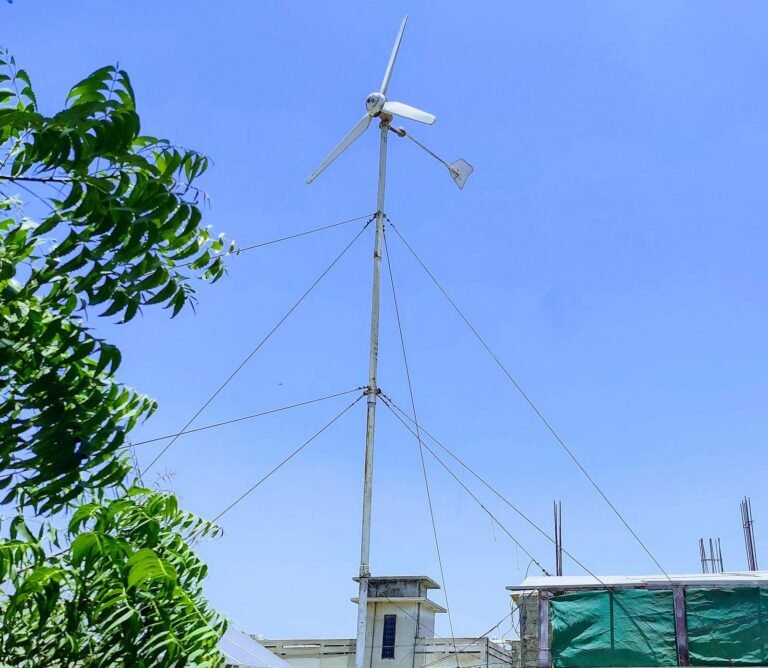
- Very low overall; a few demonstration sites (e.g., Chakwal’s Kallar Kahar micro-turbine project) exist, but wind speeds are generally insufficient for large commercial farms. Some western districts (e.g., near Dera Ghazi Khan, Bahawalpur) show marginal potential.
Summary of Viability: Over 90% of current and planned large-scale wind generation is in Sindh’s Thatta district (Jhimpir–Gharo–Keti Bandar). Coastal Balochistan offers the next frontier, especially for offshore development. Inland sites in KPK and parts of Balochistan are suitable for smaller or community-scale turbines. Punjab has the least potential.
Not every city in Pakistan is suitable—urban centers with low wind or complex terrain (e.g., Lahore, Faisalabad, or northern Gilgit-Baltistan valleys) are generally unsuitable for utility-scale wind turbines.
Challenges and Future Outlook
Despite strong potential, challenges remain: grid congestion (leading to curtailment), financing hurdles, land acquisition delays, and the need for better transmission infrastructure. However, falling turbine costs, international investment (e.g., from China under CPEC), and policy support are accelerating growth. Experts predict capacity could double or triple by 2030, helping Pakistan meet its renewable targets and power cities like Karachi and Hyderabad more sustainably.
In conclusion, wind turbines are not just a technical solution for Pakistan—they represent an opportunity for energy independence, job creation, and environmental stewardship. With the right investments, the winds blowing across Sindh and Balochistan can light up homes, factories, and a brighter, greener future for the nation. Pakistan’s wind energy journey has only just begun.
In this artical you can see wind speed in all over pakistan, Taxila, Karachi, Lahore, Faisalabad, Islamabad, Peshawar, Gujranwala, Multan, Hyderabad, Rawalpindi, Sialkot, Mardan, Quetta, Sargodha, Mingora, Gujrat, Abbottabad, Sukkur, Bahawalpur, Sahiwal, Northern areas, Kashmir Gilgar and Baltistan.