Home Wind Turbine Price in Pakistan – Complete Guide, Prices, Power Generation & Installation
Thinking about installing a wind turbine for your home in Pakistan? A residential wind turbine can be an excellent source of renewable energy in areas with sufficient and consistent wind. Depending on your location, wind speed, electricity requirements, and available space, a small wind turbine can help reduce electricity bills, provide backup power, and work alongside an existing solar system. Home Wind Turbine Price in Pakistan.
In Pakistan, interest in wind turbines for homes https://www.windturbine.pk is increasing as electricity prices continue to rise and more homeowners look for alternative energy solutions. However, choosing the right wind turbine is not simply a matter of selecting a higher-kilowatt model. The most important factor is whether your location has enough wind to produce useful energy throughout the year.
This complete guide explains everything you need to know about wind turbines for homes in Pakistan, including wind speed requirements, turbine sizes, prices, electricity generation, vertical and horizontal wind turbines, battery systems, installation, and how to determine whether a wind turbine is suitable for your home.
What Is a Wind Turbine for Home?
A home wind turbine is a small-scale wind energy system designed to convert the kinetic energy of moving air into electricity.
When wind moves across the turbine blades, the rotor spins. This rotational energy is transferred to a generator, which produces electrical power. The electricity can then be used to power household appliances, charge batteries, or be integrated into a suitable hybrid energy system.
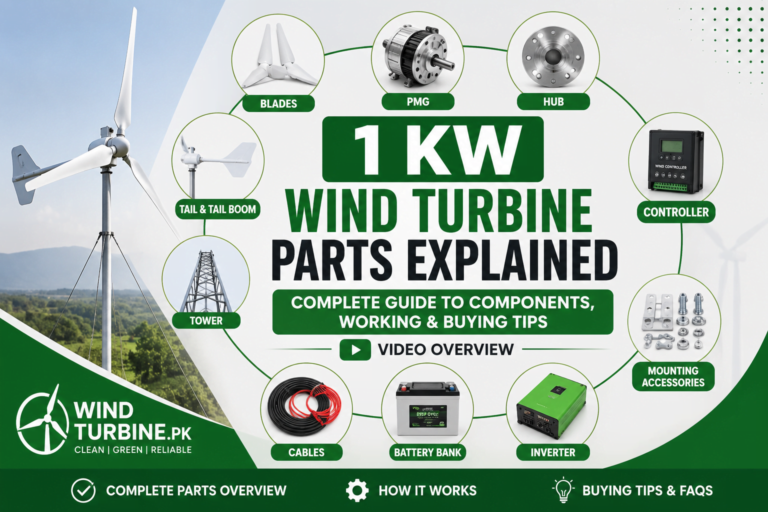
A typical residential wind turbine system may include:
- Wind turbine
- Wind turbine controller
- Rectifier, depending on the turbine design
- Dump load or diversion load for system protection
- Batteries for energy storage
- Inverter for AC household loads
- Mounting tower
- Protection and electrical equipment
The exact equipment required depends on whether the system is designed as an off-grid, hybrid, or grid-connected system.
How Much Does a Wind Turbine for Home Cost in Pakistan?
The price of a wind turbine in Pakistan depends on its rated capacity, manufacturer, technology, generator type, controller, tower, and included accessories.
As a general market guide, residential wind turbine prices may vary approximately as follows:
A complete wind energy system may cost more than the turbine itself because batteries, inverters, towers, wiring, protection devices, and installation may be required.
For the latest available options and pricing, visit our Wind Turbine Price in Pakistan page.
Which Size Wind Turbine Do You Need for Your Home?
The correct turbine size depends on your electricity consumption and, more importantly, the wind conditions at your location.
A larger turbine does not automatically mean more electricity generation. If the wind speed at your site is too low, even a large turbine may produce disappointing results.
Here is a general guide:
500W Wind Turbine
A 500W turbine may be suitable for small applications such as:
- Small lighting systems
- Security cameras
- Remote equipment
- Small battery charging systems
- Basic DC loads
It is generally not intended to power an entire modern home.
1kW Wind Turbine
A 1kW wind turbine may be suitable for smaller homes or as part of a hybrid renewable energy system.
It can potentially support:
- LED lighting
- Fans
- Wi-Fi routers
- CCTV systems
- Small appliances
- Battery charging
Actual energy production depends heavily on wind speed.
2kW Wind Turbine
A 2kW turbine can provide more energy and may be suitable for homes with moderate electricity requirements.
It can be used for:
- Lighting
- Fans
- Refrigerators
- Electronics
- Small pumps
- Battery charging
A hybrid solar and wind system can make this option more practical in areas where solar energy is strong during the day and wind is available at night or during cloudy weather.
3kW Wind Turbine
A 3kW wind turbine is a popular size for larger homes and small commercial applications.
Depending on the site’s wind conditions, it may help power:
- Household lighting
- Fans
- Refrigerators
- Small Water pumps
- Electronics
- Other moderate electrical loads
However, the actual electricity generated can vary significantly from one location to another.
5kW Wind Turbine
A 5kW wind turbine can be considered for larger homes, farms, and small businesses. 5 KW Wind Turbine in Pakistan
It may be suitable for customers with higher electricity requirements, but it requires a proper wind assessment before installation.
A 5kW turbine installed in a low-wind urban location may generate considerably less energy than the same turbine installed at a windy coastal or open rural site.
What Is the Best Wind Turbine for a Home in Pakistan?
There is no single wind turbine that is best for every home in Pakistan.
The best turbine depends on:
- Average wind speed
- Wind consistency
- Turbine cut-in speed
- Turbine rated wind speed
- Tower height
- Local terrain
- Surrounding buildings
- Electricity consumption
- Battery requirements
- Solar system integration
For homes in urban areas, vertical-axis wind turbines can sometimes be considered because of their compact design and ability to accept wind from different directions.
For locations with strong and consistent wind, horizontal-axis wind turbines are often preferred because they can achieve higher efficiency when properly installed in suitable wind conditions.
The most important thing is not simply choosing between vertical and horizontal turbines. The turbine must be correctly matched to the wind conditions at the installation site.
Vertical vs Horizontal Wind Turbine for Home
Vertical-Axis Wind Turbine
Vertical wind turbines rotate around a vertical shaft.
Potential advantages include:
- Compact design
- Wind can be captured from multiple directions
- Suitable for some urban and built-up environments
- Generator can potentially be positioned lower
- Visually different from traditional wind turbines
However, vertical turbines are not automatically better in every situation. Their performance depends on the design, rotor size, generator, wind profile, and installation location.
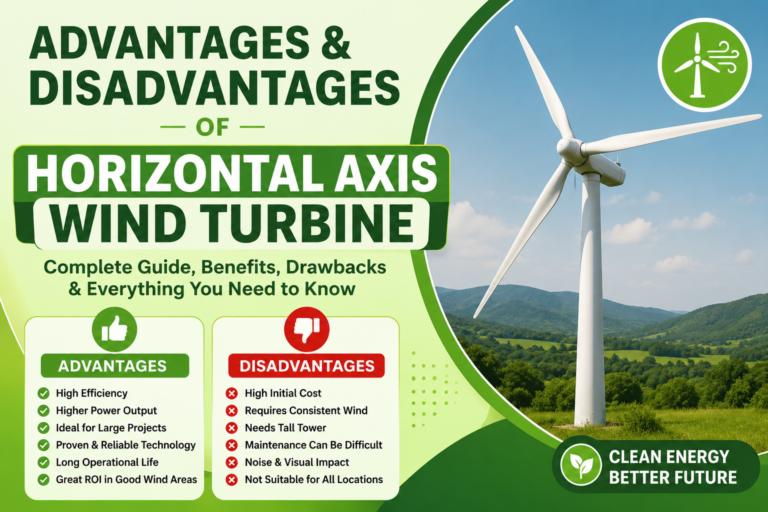
Horizontal-Axis Wind Turbine
Horizontal-axis wind turbines are the traditional wind turbines most people recognise.
Advantages can include:
- High efficiency in suitable wind conditions
- Proven technology
- Suitable for open areas
- Good performance at appropriate tower heights
They generally require proper orientation toward the prevailing wind and may need more open space.
For a home, the best choice should be based on the actual wind conditions and available installation space, not simply on the turbine’s appearance or rated capacity. https://windturbine.pk/blog/10kw-wind-turbine-in-pakistan/
How Much Wind Speed Is Required for a Home Wind Turbine?
Wind speed is one of the most important factors when evaluating a wind turbine installation.
Most small wind turbines have a cut-in wind speed somewhere around 2.5–3 m/s, meaning the turbine starts generating electricity at approximately this wind speed.
However, this does not mean that a turbine receiving an average wind speed of 2.5 m/s will produce good energy output.
There is a major difference between:
- Cut-in wind speed
- Average wind speed
- Rated wind speed
- Maximum or survival wind speed
A turbine may start rotating at a low wind speed but produce very little useful electricity.
For residential wind energy, the most important question is:
What is the average wind speed at the actual turbine installation height throughout the year?
This is why a proper site assessment is essential before purchasing a wind turbine. Home Wind Turbine Price in Pakistan
Can You Install a Wind Turbine in Karachi?
Karachi has some of the most promising locations for small wind turbines in Pakistan, particularly in areas influenced by coastal winds and open terrain.
However, wind conditions vary significantly between different parts of Karachi.
Locations closer to the coast may have better wind resources than dense urban areas. Buildings can create turbulence and reduce the effective performance of a turbine.
If you are considering a wind turbine for home in Karachi, the exact location and tower height should be considered before selecting the turbine.
A wind turbine installed on a rooftop surrounded by tall buildings may not perform as well as the same turbine installed on a properly designed tower in an open area.
Wind Turbine for Home in Islamabad
Islamabad has a different wind profile compared with coastal Karachi.
The average wind speed in Islamabad is generally lower than the strongest coastal wind locations, and local conditions can vary considerably.
For this reason, homeowners in Islamabad should not purchase a wind turbine based only on the rated capacity.
A site-specific assessment should consider:
- Exact location
- Proposed tower height
- Nearby buildings
- Trees
- Hills and terrain
- Seasonal wind patterns
If the wind resource is weak, a solar and wind hybrid system may be a better solution than relying entirely on wind energy.
Can a Wind Turbine Work With Solar Panels?
Yes. A wind turbine can be integrated into a hybrid renewable energy system with solar panels, provided the system is designed with compatible equipment.
A hybrid system can combine:
Solar + Wind + Battery Storage
This can provide a more balanced renewable energy solution.
Solar panels generally produce most of their energy during daylight hours, while wind turbines can generate electricity during the day or night whenever sufficient wind is available.
A suitable hybrid system may require:
- Solar inverter
- Wind controller
- Wind turbine
- Battery bank
- Proper protection equipment
- Compatible charging and energy management system
It is important to ensure that the wind turbine is connected through equipment specifically designed for wind energy. A standard solar MPPT controller should not automatically be assumed to be suitable for a wind turbine.
Can a Wind Turbine Charge a Lithium Battery?
Yes, a wind turbine can charge a lithium battery if the system is correctly designed.
The turbine’s output voltage must be compatible with the battery charging system, and a suitable wind charge controller must be used.
For example, a wind turbine system designed for a 48V battery bank requires a controller capable of properly managing the charging voltage and current required by that battery.
Lithium batteries also require appropriate charging parameters and battery management systems.
Therefore, the following should be matched correctly:
Wind Turbine → Wind Controller → Battery → Inverter → Home Loads
Never connect a wind turbine directly to a lithium battery without a properly designed charging and protection system.
How Much Electricity Does a Wind Turbine Generate?
The rated capacity of a wind turbine does not represent its constant electricity production.
For example, a 3kW wind turbine does not necessarily produce 3kW every hour.3 Kw wind turbine generation
Actual energy generation depends on:
- Wind speed
- Wind consistency
- Turbine power curve
- Rotor diameter
- Tower height
- Turbulence
- Air density
- System losses
A turbine operating at a strong and consistent wind site may generate substantially more energy than the same turbine installed in a low-wind urban location.
This is why annual energy production is often more useful than simply looking at the turbine’s kW rating.
Why Tower Height Matters
Wind speed generally increases with height above the ground.
At low heights, wind is strongly affected by:
- Buildings
- Trees
- Walls
- Terrain
- Other obstacles
This creates turbulence and reduces the quality of the wind reaching the turbine.
Installing a turbine on a properly designed tower can significantly improve access to cleaner and stronger airflow.
For this reason, a professional wind turbine assessment should consider the proposed tower height, not just the wind speed reported at a weather station or nearby location.
Should You Install a Wind Turbine on Your Rooftop?
Rooftop wind turbines are becoming increasingly popular, but they require careful consideration.
A rooftop may appear to be a convenient location, but buildings can create significant turbulence.
Potential problems include:
- Turbulent airflow
- Lower energy production
- Noise
- Structural loading
- Maintenance difficulties
In many cases, a properly engineered tower in an open location can provide better wind conditions than a turbine mounted directly on a building.
Before installing a rooftop turbine, the building structure and wind conditions should be professionally assessed.
Gearless vs Geared Wind Turbine
Wind turbines can use either geared or direct-drive gearless generator systems.
Gearless Direct Drive
A direct-drive turbine does not use a conventional gearbox between the rotor and generator.
Potential advantages include:
- Fewer mechanical moving parts
- Reduced gearbox maintenance
- Lower mechanical complexity
- Potentially longer service life in suitable designs
Geared Wind Turbine
A geared turbine uses a gearbox to increase the rotational speed before the generator.
Potential advantages include:
- Established technology
- Compact generator design
- Proven use across many wind turbine applications
The best choice depends on turbine design, manufacturer quality, operating conditions, maintenance requirements, and cost.
How to Choose the Right Wind Turbine for Your Home
Before buying a wind turbine, consider these factors:
1. Check Your Wind Speed
This should be your first step.
Find out the average wind speed at the proposed turbine location and installation height.
2. Calculate Your Electricity Load
Determine how much electricity your home consumes.
Consider:
- Lights
- Fans
- Refrigerator
- Water pump
- Air conditioner
- Washing machine
- Electronics
- Other appliances
3. Select the Turbine Size
Choose the turbine based on both your electricity requirements and available wind resource.
4. Decide on Battery Storage
If you need backup power or want to use electricity when the wind is not blowing, you may require batteries.
5. Consider a Solar-Wind Hybrid System
In many parts of Pakistan, combining solar and wind can provide a more reliable renewable energy solution than relying on one source alone.
6. Select the Correct Tower
Tower height can have a major effect on turbine performance.
7. Use the Correct Controller
The wind turbine controller must be compatible with the turbine, battery voltage, and system architecture.
8. Consider Installation and Maintenance
A wind turbine is a mechanical energy system and requires proper installation, protection, and periodic maintenance.
Is a Wind Turbine Worth It for Your Home in Pakistan?
A wind turbine can be a worthwhile investment if your property has a good wind resource.
It can be particularly attractive for:
- Coastal areas
- Open rural locations
- Farms
- Agricultural properties
- Remote locations
- Areas with consistent seasonal winds
In low-wind urban environments, however, the financial return may be less attractive.
For many homeowners, the best approach is to first assess the wind resource and then compare the expected annual energy production with the total system cost.
Home Wind Turbine Price in Pakistan.
If you are considering a wind turbine for your home in Pakistan, do not choose a turbine based solely on its kW rating or price.
The most important question is:
Does your location have enough wind to make the investment worthwhile?
A properly selected and installed wind turbine can provide clean renewable energy and reduce dependence on the conventional electricity grid. In suitable locations, combining wind energy with solar panels and battery storage can create a powerful hybrid renewable energy system.
For homeowners in Pakistan, the best approach is to:
- Assess your local wind speed.
- Calculate your electricity consumption.
- Choose the correct turbine capacity.
- Select an appropriate tower height.
- Use a compatible wind controller and protection system.
- Consider combining wind with solar.
- Compare expected energy production with the total installation cost.
If you are looking for a wind turbine for home in Pakistan, start by checking the available turbine options, specifications, and latest prices before making your decision.
Explore our Wind Turbine Price in Pakistan guide to compare available capacities and estimated prices.
You can also visit WindTurbine.pk to explore wind turbine solutions for homes, farms, businesses, and other applications in Pakistan.
Home Wind Turbine Price in Pakistan.
Wind Turbine Price in Pakistan.
5 KW Wind Turbine in Pakistan